
by Dr. May Agius
At AccessNow, our mission is simple and powerful: to support participation and independence for every person we serve. AAC plays a vital role in that mission. Whether someone is a child beginning their communication journey or an adult who has never had the opportunity or is navigating new challenges, a meaningful AAC assessment can expand opportunities for connection, autonomy, and engagement.
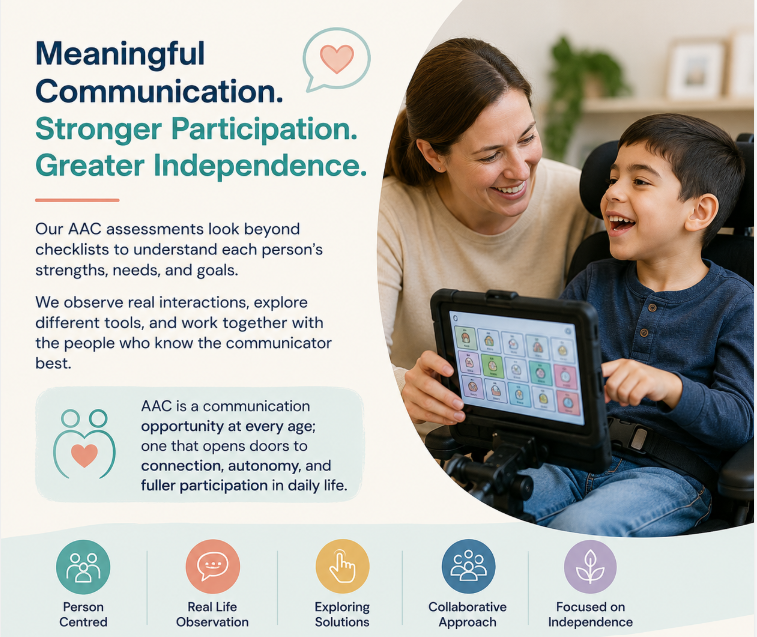
1. Planning for communication today and tomorrow
A strong AAC assessment considers what helps a person communicate right now while also planning for growth. Children develop new skills; adults may experience changes due to progressive conditions, recovery, or life transitions. Our assessments look at both immediate needs and long‑term pathways that support sustained participation.
2. Understands communication in everyday life
Communication happens in context; at home, at work, in therapy, in community spaces. We observe how a person interacts with familiar partners, how they respond to communication demands, and what supports reduce frustration. These real moments guide our recommendations and help us design AAC solutions that promote independence in everyday environments.
3. It involves trying tools, not guessing
AAC is practical and hands‑on. Whether someone is exploring eye‑gaze access, switches, robust language systems, or simple low‑tech supports, trialing options is essential. At AccessNow, we test multiple tools to see what feels intuitive, empowering, and sustainable. The goal is always the same: communication that enhances participation and autonomy.
4. It centers the voices of families, caregivers, and communication partners
Parents, spouses, siblings, support workers, and friends all play a role in communication. Their insights help us understand daily routines, challenges, and successes. We listen deeply because AAC only works when it fits into real life; and real life is where participation and independence happen.
5. It prioritizes autonomy and dignity
AAC is about giving people control over their communication; whether that means expressing preferences, participating in conversations, advocating for needs, or sharing humor and personality. Our assessments emphasize autonomy, choice‑making, and authentic expression at every age.
6. It results in a clear, actionable plan
Families and professionals leave our assessments with practical next steps: recommended tools, strategies for modeling, environmental supports, and training options. We don’t just identify needs; we help build a communication ecosystem that supports long‑term independence.
Why AccessNow?
Our AAC assessments are designed to be thorough, responsive, and person‑centered. We combine clinical expertise with genuine curiosity about each communicator’s strengths, preferences, and goals. Whether working with a child beginning their AAC journey or an adult adapting to new communication needs, we provide a service that is thoughtful, collaborative, and informed by current evidence, best practice guidelines, and years of clinical experience; all in service of participation and independence.